
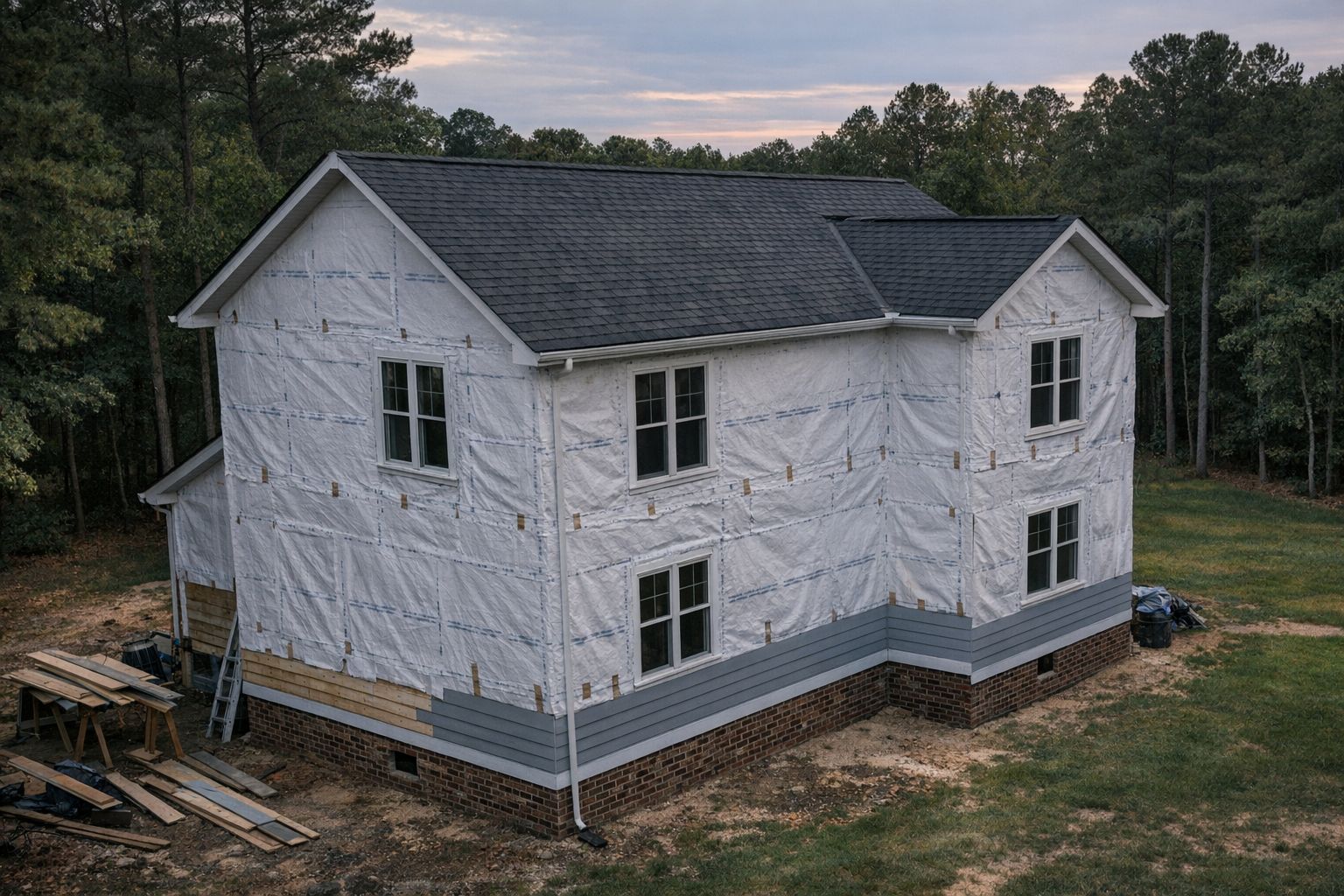
Most homeowners don’t think much about their siding until something goes visibly wrong — and by then, the damage has often been building for a while. Because Durham’s climate combines long stretches of humidity with sudden storms, siding problems here tend to develop quietly before they become obvious. Here’s what to actually look for.
Visible Cracking or Warping
A single small crack isn’t necessarily urgent, but multiple cracked or warped panels across your home usually signal that the material has reached the end of its useful life. Warping in particular often points to moisture that’s already worked its way behind the surface.
Soft or Spongy Spots
Press gently on a few different spots along your siding, especially near the ground, around windows, and beneath downspouts. If any area feels soft or gives slightly under pressure, moisture has likely reached the wood sheathing underneath — a sign that repair alone may no longer be enough.
Peeling Paint or Bubbling Wallpaper Indoors
This one surprises a lot of homeowners: peeling exterior paint or bubbling wallpaper on interior walls can both trace back to moisture getting through failing siding. If you’re seeing either of these without an obvious other cause, it’s worth having your siding checked.
Rising Energy Bills Without an Obvious Cause
Siding does more than protect against water — it’s part of your home’s overall thermal envelope. If your heating or cooling costs have crept up gradually and you haven’t changed your habits or equipment, aging or gapped siding could be part of the reason.
Fading, Chalking, or Repeated Repainting
Some fading over many years is normal. But if your siding’s color has become chalky to the touch, or if repainting no longer restores its appearance the way it used to, the material itself may be breaking down rather than just needing a fresh coat.
Mold, Mildew, or Fungus Growth
Durham’s humidity makes some surface mildew fairly common and not always a red flag on its own — a simple cleaning often handles it. But if mold or fungus keeps returning to the same spots no matter how often you clean, that persistence usually means moisture is trapped behind the siding rather than just sitting on the surface.
Loose or Missing Panels
Panels that have come loose, warped away from the wall, or gone missing entirely — often after a storm — leave the wall assembly exposed. Even if it looks minor, an exposed section should be addressed quickly before the next heavy rain gets behind neighboring panels too.
Your Siding Predates Your Last Two Major Storms
If you can’t remember the last time your siding was inspected and it’s been through several seasons of Durham’s summer thunderstorms without a look, that alone is reason enough for a check — problems aren’t always visible from the ground or from a quick glance out the window.
Where to Check First
If you’re not sure where to start, focus on the areas that take the most weather exposure: corners facing prevailing wind and rain, sections beneath gutters and downspouts, spots around window and door trim where caulking can fail, and anywhere tree limbs regularly brush against the house. These spots tend to show problems earlier than the rest of the exterior.
It’s also worth walking the full perimeter of the house rather than just checking the side you see most often from the driveway or street. Damage on a less-visible side of the home can go unnoticed for a long time simply because no one looks at it closely.
What to Do If You’re Seeing These Signs
None of these signs automatically mean you need a full siding replacement — sometimes a repair to a specific section is genuinely all that’s needed. The only reliable way to know is a hands-on assessment, which is exactly what a free estimate is for.
A good assessment should walk you through what’s actually happening, not just deliver a price. You should come away understanding why a particular section is failing, whether it’s isolated or likely to spread, and what your realistic options are — repair, partial replacement, or a full re-side — along with the tradeoffs of each.
Keeping a simple record of what you find and when — even just a few phone photos with dates in your camera roll — can also help down the road, whether you’re tracking whether an issue is spreading or discussing your home’s history with a future contractor or buyer.
Related service: Siding Replacement in Durham, NC · More from the Durham Siding Pros blog
Get a Free Siding Assessment
If any of this sounds familiar, don’t wait for a bigger storm to make the decision for you. Our siding installation and siding replacement services cover everything from a single repaired section to a full re-side, and every assessment starts with an honest, no-obligation look at what’s actually going on. Call (984) 369-2980 or request a free estimate today.