
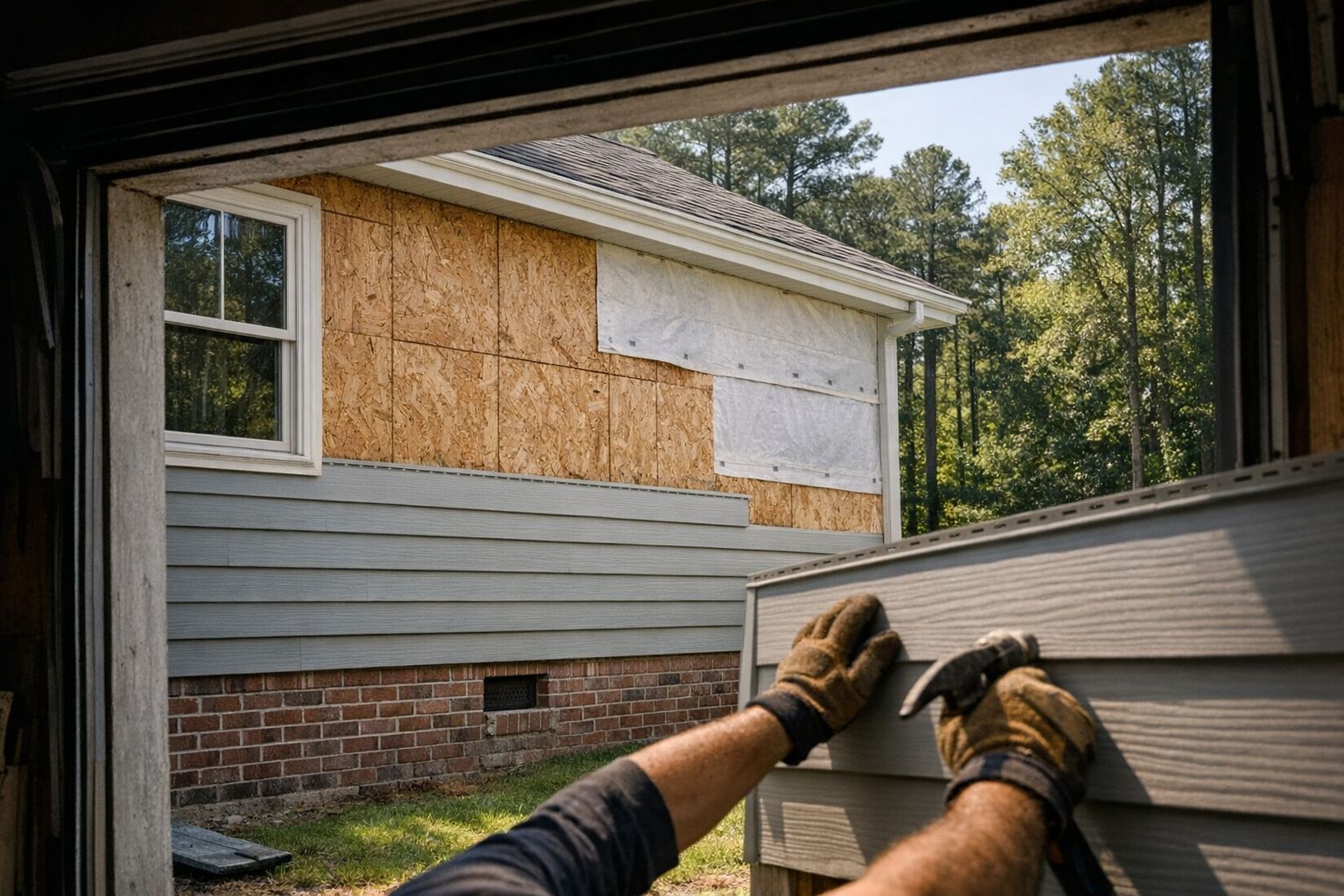
Choosing a siding material is as much about your local climate as it is about looks or budget. In the Triangle, that means picking something that can handle long stretches of humidity, sudden thunderstorms, strong summer sun, and the occasional ice event — without breaking down years ahead of schedule.
What North Carolina’s Climate Actually Does to Siding
Durham and the surrounding area sit in a humid subtropical zone. Summers bring extended heat and humidity that give moisture plenty of opportunity to work into seams, fastener holes, and any spot where caulking has started to fail. Add in regular thunderstorms, occasional remnants of coastal tropical systems, and rare but real ice events in winter, and it’s clear why “it looks fine from the street” isn’t always the whole story.
Vinyl Siding
Vinyl handles humidity well since it doesn’t absorb moisture or rot the way wood can. It’s also one of the more budget-friendly options, requires very little maintenance beyond occasional cleaning, and comes in a wide range of colors and styles.
The tradeoff: lower-grade vinyl can warp under extreme heat or impact, and very cheap products may fade faster under strong UV exposure over many years. Choosing a mid-to-high-grade product and correct installation — including proper spacing for expansion — makes a meaningful difference in how it performs long-term.
Fiber Cement Siding
Fiber cement is built from cement, sand, and cellulose fibers, giving it strong resistance to moisture, pests, fire, and impact. It holds paint far longer than wood and comes in profiles that closely mimic traditional wood grain, which makes it a popular choice for homeowners who want a classic look without wood’s vulnerabilities.
The tradeoff: it costs more upfront than vinyl and requires more specialized installation, including specific cutting techniques. For homeowners planning to stay long-term, many find the durability worth the investment.
Wood Siding
Traditional wood siding has real aesthetic appeal, especially on historic homes throughout Durham, Hillsborough, and Carrboro. But untreated or poorly maintained wood is genuinely vulnerable to this climate — humidity and standing moisture create ideal conditions for rot, and regular repainting or sealing is necessary to keep it protected.
Wood can still be the right choice for homeowners restoring a historic property or prioritizing an authentic period look, as long as they’re prepared for the maintenance commitment that comes with it.
Choosing Between Them
A few questions can help narrow the decision:
How long do you plan to stay in the home? Longer ownership tends to favor fiber cement’s durability; shorter horizons often favor vinyl’s lower upfront cost.
Is your home in a historic district or neighborhood with strong architectural character? Wood or wood-look fiber cement profiles often fit better than standard vinyl in these settings.
How much ongoing maintenance are you willing to take on? Vinyl and fiber cement both require far less upkeep than wood.
What’s your budget for this project specifically? Material costs, plus installation complexity, vary meaningfully between the three options.
A Note on Metal and Engineered Wood Options
Beyond the three main materials above, some homeowners ask about metal or engineered wood siding. Metal siding holds up well against moisture and pests but can dent under impact and tends to be a less common choice for residential homes in this region compared to commercial buildings. Engineered wood products aim to combine wood’s traditional look with better moisture resistance, though performance varies significantly between manufacturers, so product research matters more with this category than with established vinyl or fiber cement lines.
For most Triangle homeowners, vinyl and fiber cement remain the two most practical, well-proven options, which is why they make up the bulk of what we install and recommend.
Whichever direction you lean, it’s worth remembering that siding is a long-term decision. The material you choose today will be protecting your home through many more humid summers and storm seasons to come, so it’s worth weighing durability and installation quality as heavily as upfront cost and appearance.
Installation Matters as Much as Material
Even the best siding material underperforms if it’s installed poorly. Proper moisture barriers, correct flashing around windows and doors, and manufacturer-spec fastening and spacing all affect how well any siding material holds up against North Carolina’s humidity and storms over time. This is a big part of why we walk through installation details, not just material options, during every estimate.
Related service: Fiber Cement Siding in Durham, NC · More from the Durham Siding Pros blog
Talk Through Your Options With a Free Estimate
Every home and every budget is a little different, and the right siding material for your neighbor’s house isn’t automatically the right one for yours. Explore our vinyl siding and fiber cement siding services, or call (984) 369-2980 to talk through what makes sense for your home specifically.